F. E. McWilliam
1909-1992
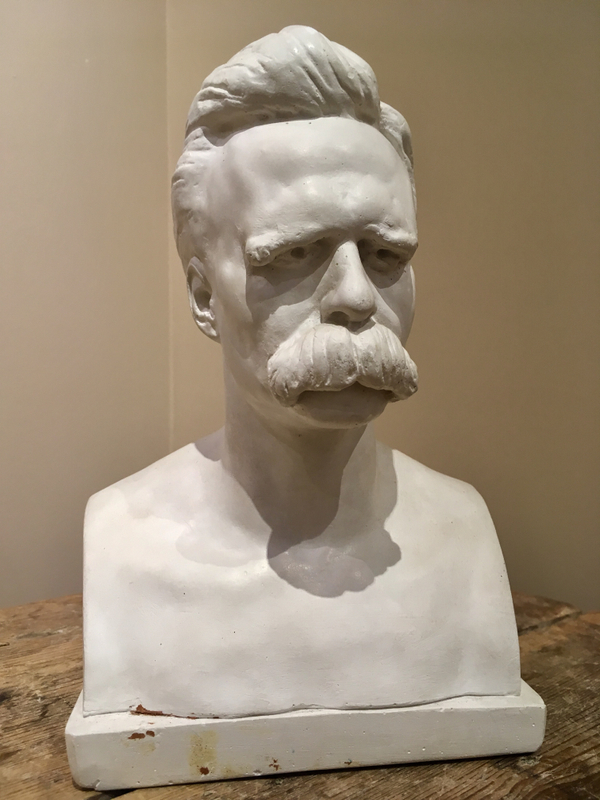
McWilliam studied first at the Slade School in London, 1928-31, and then for one year in Paris, 1931-32. He exhibited with abstract and Surrealist groups before the war and held his first one-man show in London in 1939. In 1940 he joined the R.A.F. and served in the Far East as an Intelligence Officer. After the war his work was represented in the International Open Air Sculpture Exhibitions staged in London (1948, 1951, 1954 and 1957) - as well as many group exhibitions in Western Europe and North America. He was a national prize winner in the international sculpture competition, The Unknown Political Prisoner, and first prize winner in the Football and the Fine Arts exhibition, London in 1953. His commissions included two for the Festival of Britain, 1951, and the Princess Macha, 1957, and for a Hospital in Londonderry, Northern Ireland. His work is represented in the Victoria and Albert Museum, the Tate Gallery, the Museum of Modern Art, New York and many other international public collections. In 1959 he was elected an Associate of the Royal Academy of Arts. The smooth contoured carvings of the immediately pre and post-war periods (the influence of Moore was evident in the latter) at first gave way to more attenuated figures of metal construction. These figures, occasionally recalling those of Giacometti, were often depicted in violent action. He then moved on to a series of more static and hieratic groups and single figures, the surface detail of which is coloured by recollections of Celtic ornament. McWilliam was also a gifted portraitist, exemplified in the simplified realism of his full-length bronze of Elizabeth Frink, acquired by Harlow New Town for an open-air site.