Skip Navigation

Henri Laurens

1885-1954

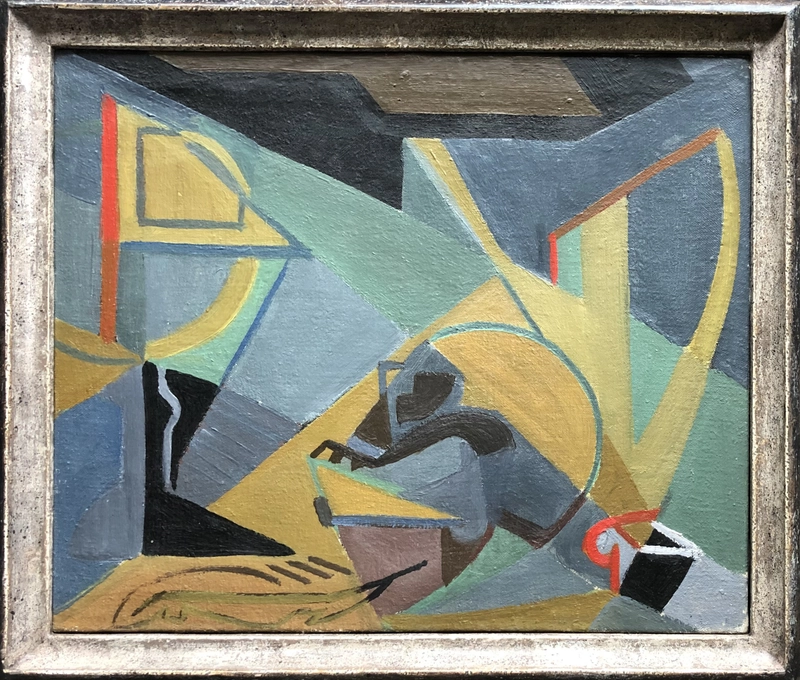
Laurens began his training as a student of the decorative arts, and his first sculptures were done for buildings. In 1911 he joined forces with Braque and embraced Cubism. He used collage and polychromy to create geometrical compositions with objects from real-life as a starting point. After this geometrical period, he became more interested in curved, naturalistic forms, taking the female body as his theme; this development closely parallels that of Picasso. Also in 1937, he excecuted several high reliefs, including Earth and Water for the Sevres pavilion at the Universal Exhibition, and Life and Death for the Palace of Discovery. He then concentrated exclusively on the curve, and sculpted several massive pieces which developed the theme of the curve in an increasingly abstract way. Laurens said: 'My aim is for ripeness of form. I want to make my forms so full, so juicy that one could add nothing more to them.' In 1950 he shared the Grand Prix of the Venice Biennale with Matisse, and he won the Grand Prix at Sao Paulo in 1953. His work is represented in public collections worldwide.