Skip Navigation

James Brooks

1906-1992

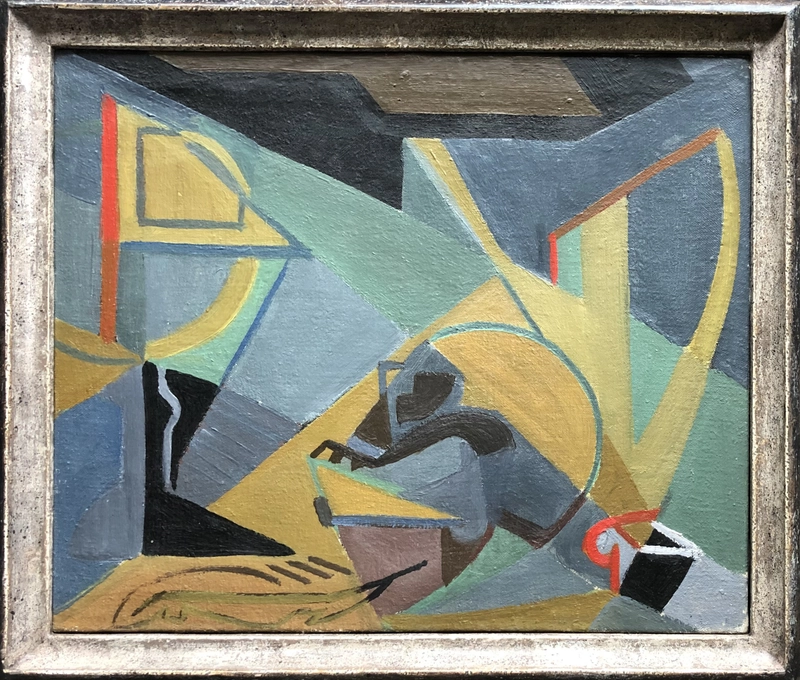
Brooks went to New York in 1926 and he found work as a lettering artist, attending art classes and painting in his spare time. He worked on the WPA Art Project (1938-42) as a mural painter, and, in his enormous Flight (New York, La Guardia Airport, obliterated), developed a monumental Cubist realism. After World War II he became a close friend of Jackson Pollock and Bradley Tomlin and, following their lead, developed an Abstract Expressionist style with broad gestures. His earlier works in this style were the more fluid, using calligraphic swirls and drips of paint, eg Number 27 (1950, New York, Whitney Museum). In the later paintings the colour patches became larger, tending to conflict more with each other, as in Boon (1957, Tate Gallery, London). He had a retrospective exhibition circulating from the Whitney Museum of American Art in 1963-4. His work figured in many collective exhibitions of advanced American art and is represented in leading public collections worlwide. Brooks was highly articulate and made an important theoretical contribution to the Abstract Expressionist movement. Amongst his many public statements is the following: 'The painting surface has always been the rendezvous of what the painter knows with the unknown, which appears on it for the first time. An engrossment in the process of changing formal relations is the painter's method of relieving his self-consciousness as he approaches the mystery he hopes for. Any conscious involvement (even thinking of a battle or standing before a still life) is good if it permits the unknown to enter the painting almost unnoticed. Then the painter must hold this strange thing, and sometimes he can, for his whole life has been a preparation for recognizing and resolving it.'